

BLOG
Notes from practice.
What we learn while we build — AI patterns, migrations, a few market observations. Writing helps us sort what we have learned.
More articles
-
Methodology AI in the Office: 6 Quick Wins You Can Roll Out Today
If you think of ChatGPT helping you draft emails when someone says 'artificial intelligence' — you've only seen the tip of the iceberg. The real strength of AI shows up where office work actually hurts: in the repetitive, time-eating tasks nobody enjoys but that still have to be done.
-
AI patterns Pragmatic Claude Code Usage for C# Developers on Mac
Claude Code works excellently for C/.NET development on Mac – despite the Python/TypeScript focus of coding LLMs. The key lies in targeted context engineering: skills for C code standards, a PRD-based workflow (Plan → Generate → Code), Git worktrees
-
AI patterns Markdown for Agents
AI agents are becoming the primary 'reader' of web content — and they prefer Markdown over HTML. This article is for web developers and DevOps engineers who want to make their sites agent-friendly without depending on a specific hosting provider. It walks through two implementation approaches — application-specific and proxy-based — with a concrete .NET code example and a sample Nginx configuration.
-
AI patterns C# / .NET MCP Server Demo
Anthropic's Model Context Protocol (MCP) is becoming a standard way to integrate AI models with external tools and data sources. Most of the available demo implementations are in Python or TypeScript — this C#/.NET project shows how MCP fits cleanly into the Microsoft ecosystem.
-
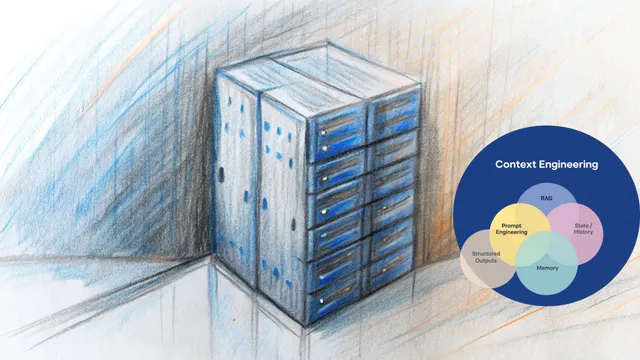
Methodology From Prompt Engineering to Context Engineering
Prompt Engineering is the art of shaping a single text input — the 'prompt' — so that a Large Language Model (LLM) responds as well as possible. Since GPT-3.5 arrived, developers have spent countless hours tweaking wording, reordering prompt parts and refining system instructions. There's a more durable approach.
-
AI patterns Introduction to LLMs and GPTs
A non-technical introduction to how Large Language Models (LLMs) and GPT models actually work — covering tokens, embeddings, the Transformer architecture, training, and where the field is heading.
-
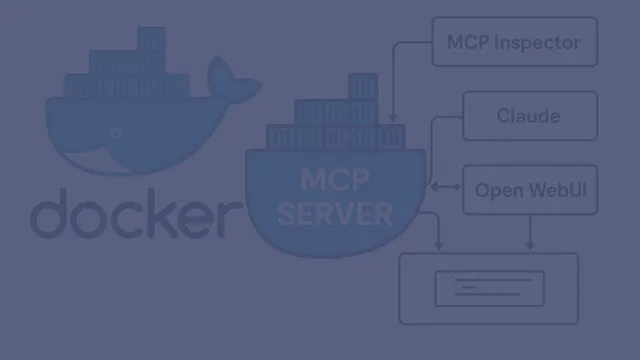
AI patterns Deploying and Using MCP Servers in Docker
Many MCP server examples target Python and TypeScript, yet SDKs are available for Java, C# and more. We at evanto usually deploy our projects via Docker — so how do you wire a Dockerised MCP server into the common hosts?
-
Market Free Development Capacity – Fast, Flexible and Cost-Effective
Need extra engineering hands at short notice? Our team has free capacity for AI, .NET, Angular and DevOps work — from a single project day up to a hundred, on terms that reflect the short-notice nature of the arrangement.
-

Migration Migration is not everything: monitoring and telemetry
Earlier articles in this series focused on the migration process itself. This one looks at the surrounding modernisation work — monitoring, telemetry and the other concerns a current IT landscape demands.
-

Migration Software migration in practice: .NET to .NET Core
This is the fourth part of our series on migration — you'll find the introduction here. A close look at moving from classic .NET Framework to modern .NET (Core).
-

Migration Phases of a Software Migration Project
Once the decision to migrate has been made, the work breaks down into a sequence of phases — each demanding careful planning, analysis and execution. This third part of our migration series walks through them in detail.
-

Migration Considerations Before a Migration Project
Planning a successful software migration involves many factors. This is the second part of a series — the introduction is here. Below are some thoughts you should consider before a migration.
-

Migration Introduction: Software Migration in the IT Landscape
The start of a short article series on the complex topic of software migration. We begin broadly and then narrow the focus to the tech stacks where our team can offer real, professional support.
-

Market IT Administrator Wanted
evanto media GmbH is an IT services company with internal IT focused mainly on software development and web hosting. We also look after the IT infrastructure of small and mid-sized customers. We're looking for an IT Systems Administrator (m/f/d), full-time (40h/week), to support us with the design, build and maintenance of these IT systems.
-
Market Change of Legal Form: from AG to GmbH
After more than 20 years as a non-listed AG (German public limited company), we changed our legal form to a GmbH (German limited liability company). The main reason: organisational simplicity. Share capital, ownership, staff and management remain unchanged.
NEWSLETTER
Four to six times a year, no marketing noise.
One pattern, one case, one recommendation. Signup with double opt-in, unsubscribe at any time.